I didn't start with
a framework.
I started with a
production floor.
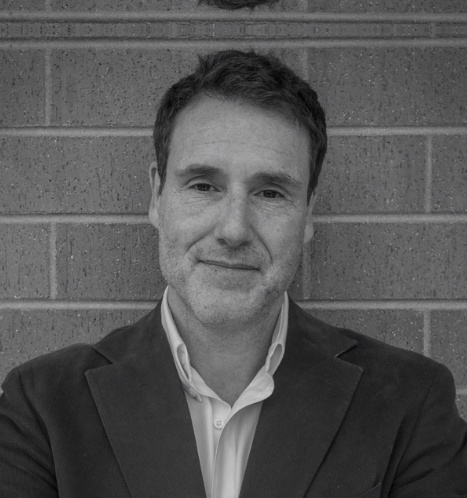
Christian Ageno is the founder of Ricreation — a systems builder and bilingual facilitator who has spent thirty years in the rooms where the work actually happens.
My first mentor
taught me.
To live in both worlds — the scientific and the organic, the language of process and the language of people. He had excellent systems and a remarkable team. What made him exceptional was knowing that good work drifts without the human layer that holds it together. That became my first real job. And the foundation of everything I've built since.
Quality frameworks
taught me.
That structure is not a ceiling — it's a launching pad. Without the right structure, even the most dedicated people spend their energy just keeping things from falling apart instead of building what's next. Applied well, it turns good intentions into repeatable, scalable, excellent work.
Theory of Constraints
taught me.
To look for root causes and the one constraint that, once fixed, quietly improves everything else. Process improvement was never about squeezing people — it was always about increasing their capacity.
Lean manufacturing
taught me.
To see where intention drifts away from the people it's meant to serve. It showed me how often effort goes into work they don't actually need — and how quickly that changes once the gap becomes visible. Find what's in the way. Clear it. Let the work move toward the people who need it.
Building ventures
taught me.
To strip away noise and focus on what people actually value. Through two frameworks and three kinds of practice — owning businesses, advising entrepreneurs, and teaching at the Chamber of Commerce in Madrid — I learned that the question matters more than the answer, and that you test with the people you're serving before you grow what works.
I grew up professionally in an era of quiet compliance. Systems ran well on paper, and a little rough on people. Push beat pull; telling beat listening; that was simply how things worked.
Even then, my craft was translating between the formal story and the lived one. Now the systems reach further — models, AI — and the people inside them have more voice, more options.
The two have never
needed each other more,
or felt this far apart.
Humans are organic.
Systems are scientific.
Both are necessary. Neither alone is sufficient.
People before tools.
The thinking comes first. Tools serve it — never the other way around. AI included — it accelerates the work, it doesn't replace the people.
You already have enough.
Most of what an organization needs is already inside it. The work is putting it to use — not adding more.
Perception never runs out.
Human perception is the only resource that is always present, always free, and never runs out.
Listening demands action.
Feedback is a gift — but listening without action destroys trust faster than never asking at all.
Doing, not just knowing.
Insight only matters when it turns into new habits, rhythms, and decisions in the day-to-day work.
Ownable over dependent.
Every engagement ends with the client running the system. The measure of success is an organization that no longer needs Ricreation in the room.
Contextualization over standardization.
No two organizations are the same. The same message, the same policy, the same framework — it lands differently for a Gen Xer than a Gen Zer, for the boardroom than the shop floor. Same truth, different container.
Built for any room.
Built around human dynamics, not industry assumptions — so it works anywhere people come together to solve something. Yours included.
Bilingual by practice.
Spanish and English, with a genuine language justice perspective — not translation, but meaning-making across cultures.
Value and values.
Value — each side has to bring something the other actually needs.
Values — neither side can push what the other doesn't connect with.
Both. Both ways.
Where these two aren't met
is where the fracture appears.
Every system I'd ever worked inside was built to push value one direction.
Downstream — from the top, through everyone inside, out to the customer. What none of them did was complete the cycle and carry it back. That gap is what Ricreation was built to close.
Capture what people are already thinking, saying, and experiencing — before it's lost.
Fold their feedback into everyday decisions and routines.
Real value, returned to the people who shaped it.
Ricreation is not a brand name.
It is a verb,
a process in motion.
Not invented. Uncovered.
The meaning was always
inside the word.
Everything I do connects to one belief: most organizations already have more than enough.
The people are capable.
The knowledge exists.
The commitment is real.
But the structure around it makes that hard to surface — systems that favor the official version over the real one, reports that land without anything changing, help that keeps solving the problem instead of building capability.
Ricreation exists to put what's already there to work.
The goal has never been to be needed, but
to leave people more capable than when I arrived,
and then rise together to the next level.
Your systems
and people,
working as one.